A report of trends, monitoring, and mitigation efforts on WGL’s natural gas distribution pipeline system
Updated August 2026
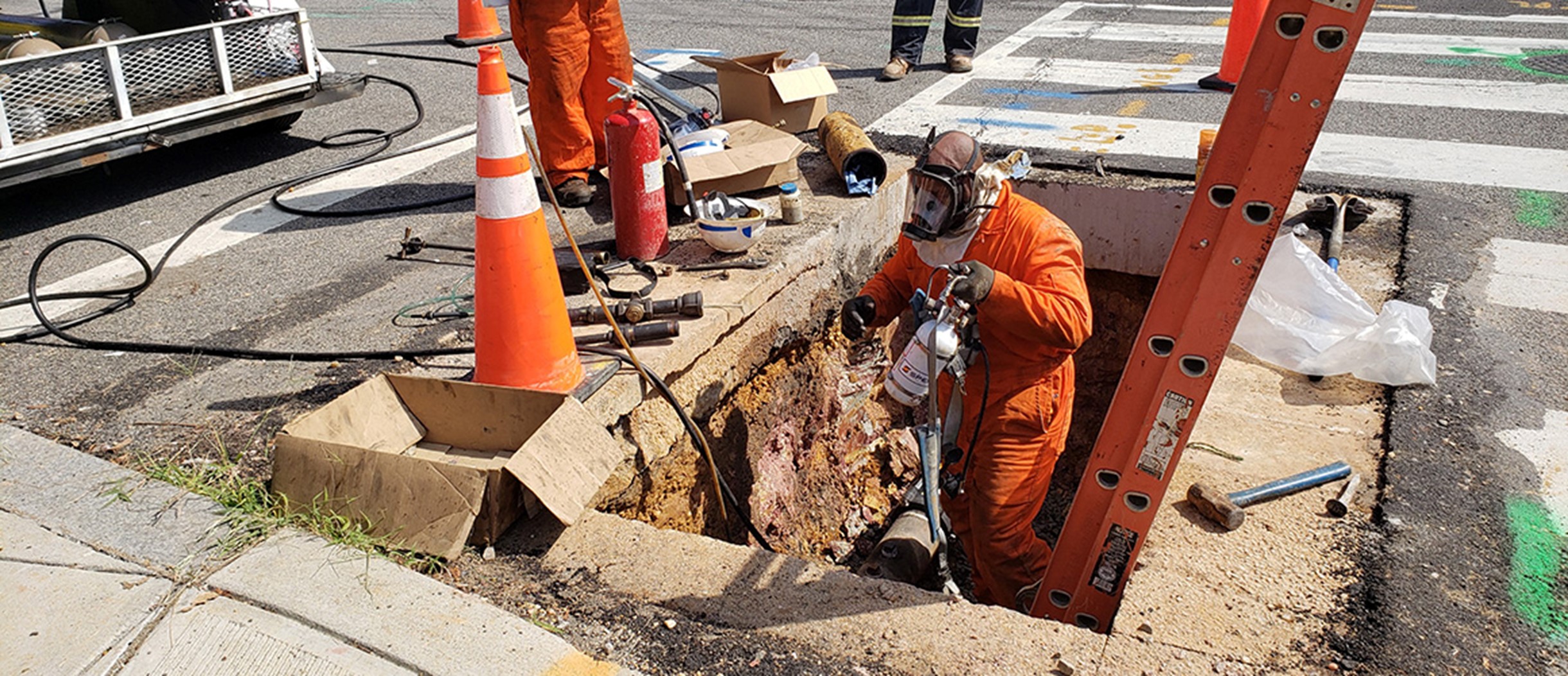
Overview
Increasing transparency and improving access to natural gas leak information and trends is a top priority for the DCPSC. The Washington Gas Light Company (WGL) owns an approximately 1,200-mile natural gas distribution pipeline system in the city which provides service to approximately 165,000 District customers. This leak information is beneficial to those ratepayers and other stakeholders. DCPSC staff closely monitor WGL’s natural gas leak trends, WGL’s ongoing gas leak survey and detection program, the company’s annual leak repair efforts, as well as its pipeline replacement program. Trained and certified Commission staff continue to conduct pipeline safety and damage prevention inspections. In 2025, they completed approximately 357 pipeline safety inspections and 299 damage prevention inspections.
Natural gas leaks by occurrence and type
The Commission monitors WGL’s reporting of gas leaks to the Pipeline and Hazardous Materials Safety Administration (PHMSA). Federal authorities require gas operators to report leaks in two categories: “total” leaks and “hazardous” leaks. PHMSA defines a hazardous leak as one that represents an existing or probable hazard to persons or property and requires immediate repair or continuous action until the conditions are no longer hazardous.
There were a total of 1,499 gas leaks in 2025 in the District, representing a 21.28% increase from 2024. Approximately 951 of those leaks (63.44%) were deemed hazardous. While the increase in reported leaks warrants continued monitoring, total gas leaks remain approximately 14.49% below 2019 levels. The Commission will continue monitoring leak trends and underlying causes to assess whether this increase reflects temporary conditions or a developing trend. Continued monitoring also ensures that long-term improvements in pipeline safety and leak reduction are sustained.
Of the 1,499 gas leaks reported in 2025, 945 occurred on “mains pipes,” which are distribution pipes that serve as a common source of supply for more than one customer line. 554 gas leaks occurred on “service” line pipes, which are pipes that transport gas from a common source of supply to a customer. Of the main lines leaks, 468 were classified as hazardous and 477 as other. Of the service line leaks, 483 were hazardous and 71 were classified as other. This information helps the Commission identify where leaks occur and evaluate trends across the distribution system.
Gas leaks that occur on private and/or customer-owned piping, appliances, and other equipment located “behind-the-meter” inside a commercial building or residence can be hazardous if undetected and not repaired immediately. These leaks often occur in confined spaces without adequate ventilation or other protections. It is the property owner and/or manager’s responsibility to properly maintain such equipment and piping within their property to further protect customer and public safety. The gas leak tables noted below only cover gas leaks on WGL-owned piping and equipment.
The tables below provide a comparison of gas leak data for calendar years 2021-2026, as reported to PHMSA. The category of “other” represents those gas leaks reported to PHMSA which are not deemed hazardous.
WGL Natural Gas Distribution System Leaks by Calendar Year for the District of Columbia
MAINS
| |
2021 |
2022 |
2023 |
2024 |
2025 |
| Hazardous |
449 |
390 |
542 |
473 |
468 |
| Other |
207 |
149 |
126 |
216 |
477 |
| TOTAL |
656 |
539 |
668 |
689 |
945 |
SERVICES
| |
2021 |
2022 |
2023 |
2024 |
2025 |
| Hazardous |
570 |
579 |
554 |
497 |
483 |
| Other |
72 |
49 |
36 |
50 |
71 |
| TOTAL |
642 |
628 |
590 |
547 |
554 |
| GRAND TOTAL |
1,298 |
1,167 |
1,258 |
1,236 |
1,499 |
| Difference from previous year |
|
|
|
-1.75% |
+21.28% |
| Cumulative difference from 2019 |
|
|
|
-29.57% |
-14.59% |
WGL Natural Gas Distribution System Leak Rates by Calendar Year for the District of Columbia
MAINS
Leaks per mile of main
| |
2021 |
2022 |
2023 |
2024 |
2025 |
| Hazardous |
0.37 |
0.32 |
0.44 |
0.39 |
0.39 |
| Other |
0.17 |
0.12 |
0.10 |
0.18 |
0.39 |
| TOTAL |
0.54 |
0.44 |
0.55 |
0.57 |
0.78 |
SERVICES
Leaks per 1,000 services
| |
2021 |
2022 |
2023 |
2024 |
2025 |
| Hazardous |
4.55 |
4.62 |
4.44 |
3.97 |
3.42 |
| Other |
0.57 |
0.49 |
0.29 |
0.40 |
0.81 |
| TOTAL |
5.12 |
5.01 |
4.72 |
4.37 |
4.23 |
Causes of Natural Gas Leaks (2019-2025)
All leak root causes are identified and reported annually by WGL to PHMSA in accordance with federal regulations. According to data reported to PHMSA from 2019 to 2025, the most frequent leak causes are due to pipe, weld, or joint failure and corrosion.
Mains
| Pipe, weld, or joint failure |
54.7% |
| Natural forces |
24.3% |
| Corrosion |
12.3% |
| Excavation damage |
5.8% |
| Incorrect operations |
1.5% |
| Equipment failure |
1.4% |
Services
| Corrosion |
46.9% |
| Pipe, weld, or joint failure |
23.6% |
| Excavation damage |
18.9% |
| Incorrect operations |
6.6% |
| Natural forces |
4.0% |
| Outside forces damage |
3.6% |
| Equipment failure |
1.1% |
Natural Gas Quality of Service Standards (NGQSS)
In addition to monitoring WGL gas leak data reported to PHMSA, the DCPSC adopted Natural Gas Quality of Service Standards that requires WGL to provide, among other things, quarterly detailed leak reports, known as the Leak Identification, Detection, and Repair, and Odor Complaints report (LIDAROC). This report contains, among other things, a numeric grade for each leak, the type of leak, a location of leak (including the ward), the gas pressure involved, the number of customers affected, the cause of the leak, an estimated and actual time to repair the leak, and other actions taken. Leak reporting requirements to the DCPSC are more stringent and detailed than the summarized annual gas leak reporting provided by WGL to PHMSA. The DCPSC monitors WGL’s performance quarterly and annually.
All leaks reported to the DCPSC in the LIDAROC process are graded 1 through 3. A Grade 1 leak refers to a hazardous leak that presents an immediate or probable hazard to persons or property and requires immediate repair or continuous action until the conditions are no longer hazardous. A Grade 2 leak refers to a leak that is recognized as being non-hazardous at the time of detection, but requires scheduled repair based on probable future hazard. Grade 2 leaks are monitored and scheduled for repair, but do not require immediate action. A Grade 3 leak refers to a leak that is non-hazardous at the time of detection and can be reasonably expected to remain non-hazardous. Grade 3 leaks are monitored to ensure they do not worsen. Grade 1 and Grade 2 leaks reported to the Commission are generally included in the leaks reported to PHMSA.
The DCPSC oversees WGL compliance with NGQSS and monitors the utility’s performance both quarterly and annually.
WGL activities
Repairs
WGL undertakes extensive gas leak repair efforts every year, including emergency repairs. Annual leak repair expenses fluctuate based on the number and nature of the leaks as well as the magnitude of repairs needed.
WGL also performs ongoing infrastructure replacement activities to maintain the safety and reliability of the District's natural gas distribution system. As of year-end 2025, WGL's District natural gas distribution system consisted of approximately 1,211 miles of main and nearly 1250,000 service lines.
WGL also implements accelerated pipe replacement programs designed to proactively replace aging or higher-risk infrastructure.
Leak survey and detection
In addition to responding to leak calls reported by the public, WGL conducts periodic leak surveys throughout the District using six survey cycles based on the characteristics of the surrounding area and the type of piping infrastructure. Leakage surveys are systematic inspections used to locate any leaks in a gas piping system. A survey consists of testing and inspection of the area around the pipelines with gas detection equipment by a qualified technician. The entire distribution system is surveyed on a three-year cycle, exceeding the five-year minimum requirement outlined in federal regulations.
| Piping description |
Leak survey cycle |
| Business districts |
Annual |
| Places of public assembly |
Annual |
| High-pressure transmission systems |
Six months or twice per year |
| Cast iron systems (above 1psig) |
Annual |
| Gas mains on structures in commercial districts |
Three months or four times per year |
| Gas mains on structures in non-commercial areas |
Six months or twice per year |
NOTE: Mains on structures are WGL-owned pipes attached to structures such as buildings or bridges. This category does not include any customer-owned behind-the-meter piping.
The DCPSC previously approved a WGL Advanced Leak Detection (ALD) pilot program to review, test, and deploy ALD equipment and practices. The ALD program involves advanced vehicle-mounted sensing equipment. The DCPSC continues to monitor the evolution of this program.
DCPSC pipeline safety, damage prevention, and service quality activity
The DCPSC Office of Compliance and Enforcement (OCE) coordinates pipeline safety and damage prevention efforts for the Commission which complement federal laws and regulations governing gas pipeline safety, damage prevention, and pipeline operations, maintenance, and construction. OCE staff include PHMSA-trained and certified inspectors whose certifications are continually updated through on-going pipeline safety courses. OCE continuously conducts pipeline safety inspections — in CY2025, OCE executed 357 pipeline safety inspections and 299 damage prevention inspections.
OCE also monitors gas pipeline damage incidents caused by excavation activity in the District. WGL experienced 139 gas pipeline damage incidents in 2025 in the District, representing about a 8.6% increase from 2017 damage incidents, while the number of excavation tickets increased by approximately 83%.
OCE may propose monetary and non-monetary compliance and enforcement actions if necessary for WGL to comply with federal and District laws and regulations. Monetary penalties serve as a deterrent to future violations and unsafe practices and are not recovered in utility rates. The DCPSC pipeline safety and damage prevention efforts are audited annually by PHMSA and the U.S. Department of Transportation. The DCPSC has received 11 consecutive 100% scores on PHMSA annual audits from 2015-2025.
Washington Gas Pipeline Replacement Program
The Commission oversees WGL’s efforts to modernize the District's natural gas distribution system. This work involves replacing older pipelines to enhance safety and reliability for residents and businesses.
Historically, this work was conducted under the company’s multi-phase accelerated replacement program, PROJECTpipes. The Commission is evaluating a new risk-based replacement framework, the District Strategic Accelerated Facility Enhancement (District SAFE) Plan, which prioritizes projects based on risk reduction and system safety benefits.
Learn more about WGL’s pipeline replacement program.
Updates
Commission staff will periodically update this gas leak data and other relevant information with the latest annual information reported by WGL.